One-piece liner
Foil and heat-seal layer laminated to a paperboard or foam backing. The whole liner bonds to the bottle lip, so no reseal liner stays in the cap.
Induction seal aluminium foil liners for PE, HDPE and PET bottle necks from 15 to 120 mm, with 38 mm the most common size, plus handheld induction cap sealers. Tell us your cap, bottle and product. We research China-based suppliers, coordinate samples and help you compare them.
SAQVORO is an independent China sourcing coordinator, not a manufacturer. Specifications, documents and terms are confirmed with candidate suppliers.
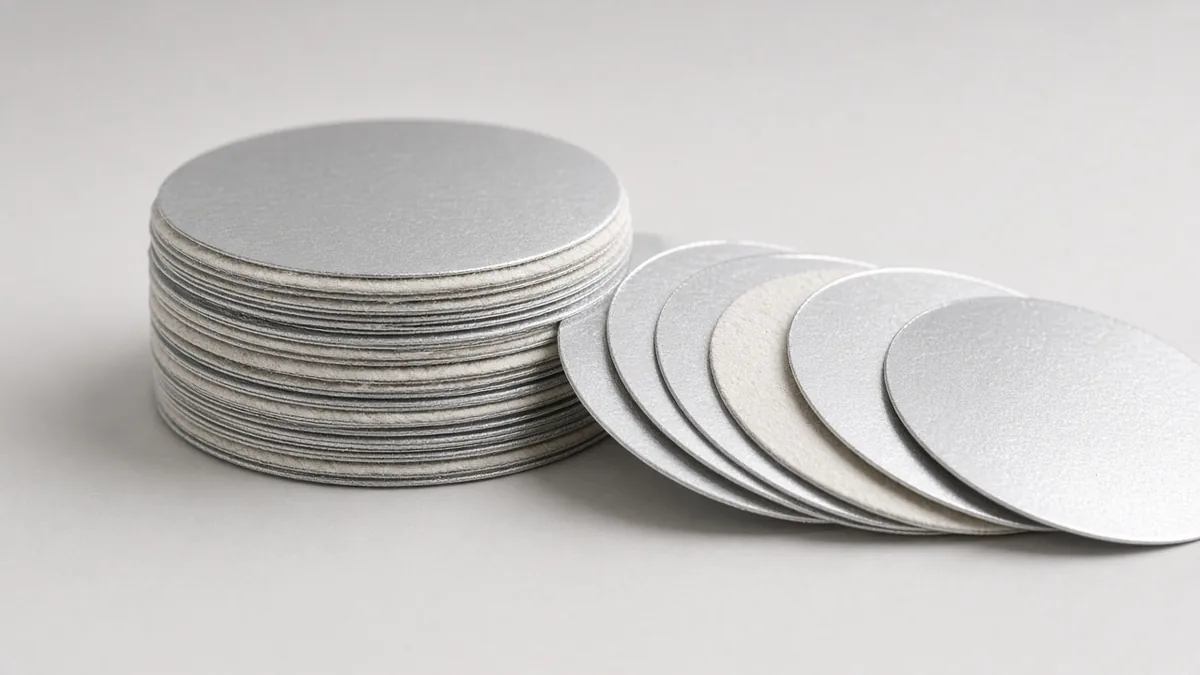
An induction seal liner sits inside the cap. After the bottle is capped, an induction sealer creates an electromagnetic field that heats the aluminium foil without contact. The heat-seal layer melts and bonds to the bottle lip, forming a tamper-evident, leak-resistant seal that the end user peels off.
Bottles and jars for food, supplements, personal care and household products that need a tamper-evident, leak-resistant seal under the cap.
Bottle material, cap, liner, cap torque and sealer power all affect the result. Weak seals and overheated foil are the most common problems, so we recommend sample tests on your own bottles, caps and product before any order.
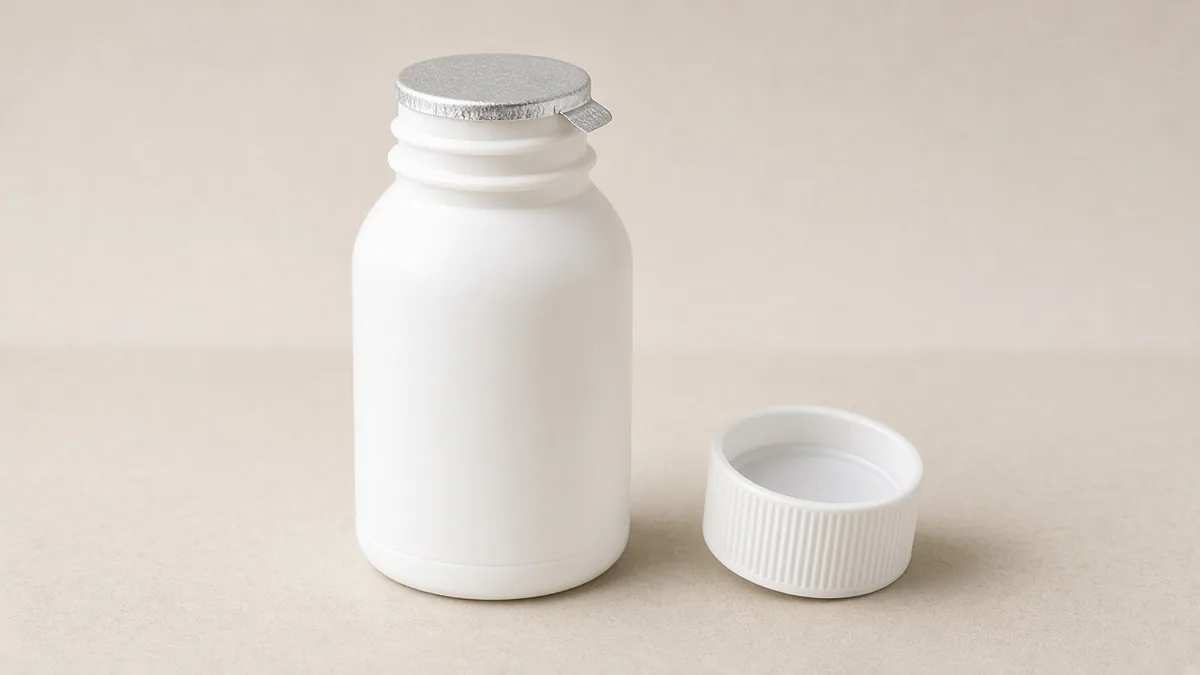
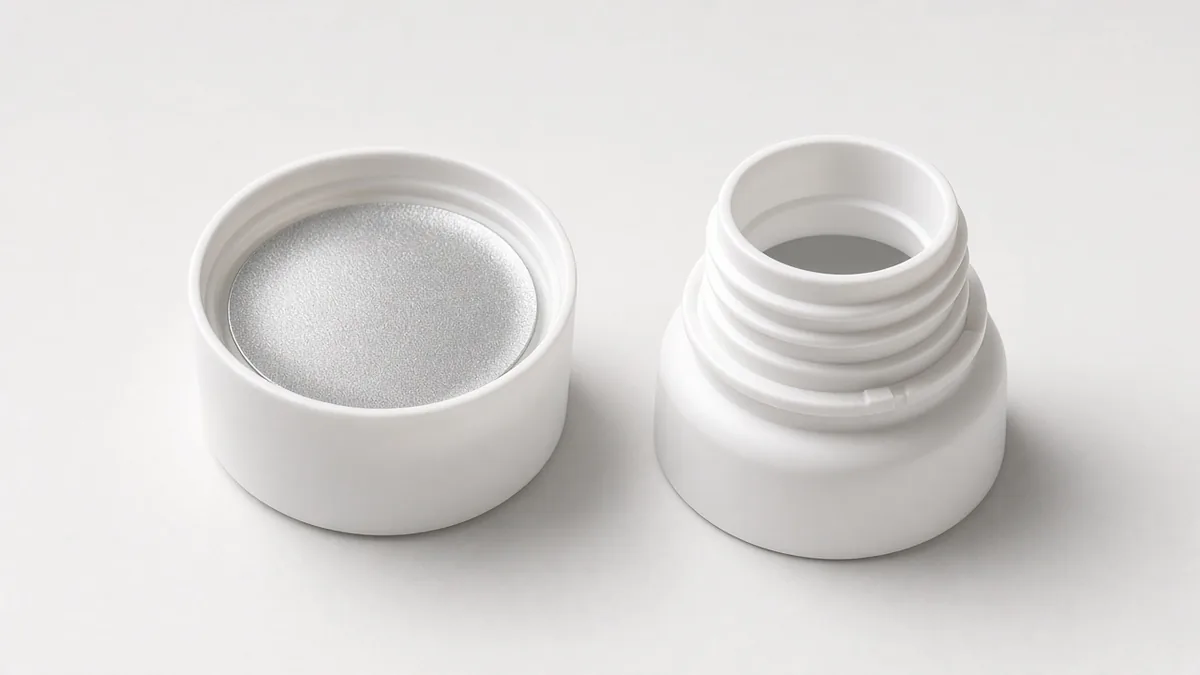
Common structures listed by candidate suppliers. The right one depends on your product and whether the cap needs a reseal liner.
Foil and heat-seal layer laminated to a paperboard or foam backing. The whole liner bonds to the bottle lip, so no reseal liner stays in the cap.
A backing board, a wax layer and the foil seal. During sealing the wax melts into the board: the foil stays on the bottle and the board stays in the cap as a reseal liner.
Adds a venting layer that lets gas pass while keeping liquid in. Discussed for products that release gas or where bottles may swell or collapse.
Has a tab or peelable layer so the end user can remove the seal by hand, without a knife.
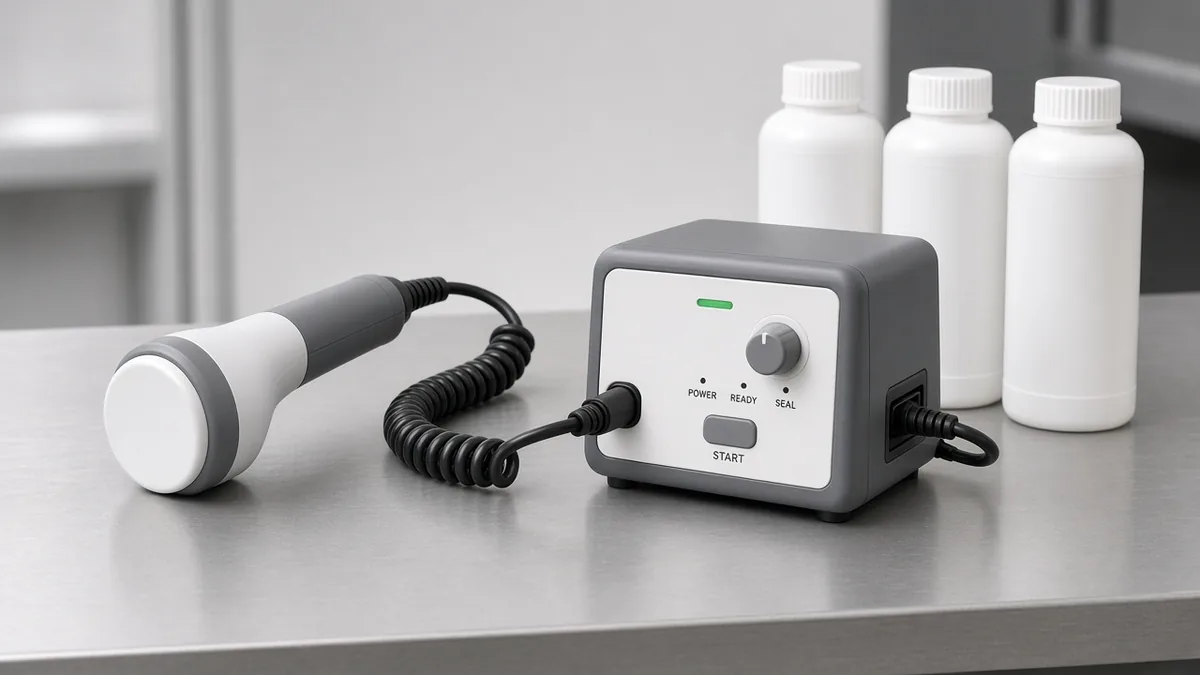
A handheld sealer is held over the capped bottle and seals the foil without touching it. It suits trials, small batches and lower daily volumes; higher-output lines usually use a conveyor sealer. Before choosing one, confirm:
Liner suppliers usually quote by diameter, structure and quantity. We help compare liner structures, documents, sample results, MOQ and lead times, so you can decide with the same information from each candidate supplier.
We review your cap size, bottle material, product and quantity, and list anything still to confirm.
We look for China-based liner and sealer suppliers and review the company and product information they publish.
We coordinate liner and sealer samples so you can test them on your own bottles, caps and product.
We request business licences, technical data sheets and compliance documents, and check that they match the supplier and the product quoted.
After you choose a supplier, we help follow up on production, packing and shipping within the agreed scope.
Not sure about some details? Send what you know. We can clarify the rest together.
For bottle and cap distributors: list the cap sizes you stock, such as 28 mm or 38 mm, the bottle materials and your expected annual use. Tell us whether you need liners only or caps with liners fitted.
For small fillers and new brands: a handheld sealer with matching liners is a common starting point. Share your bottles, caps, daily volume and mains voltage so suppliers can propose a matching set.
Send your current liner details or a sample, and any problems you see, such as weak seals, overheated foil or leaks. Suppliers can then propose a liner and settings to test on your own bottles.
No. SAQVORO is an independent China sourcing coordinator. We are not a manufacturer and we do not represent any supplier. We research and compare candidate liner and sealer suppliers for your requirement.
It depends on the bottle material, the cap, the product and the sealer. The heat-seal layer must suit PE, HDPE or PET, and the result also depends on cap torque and sealer settings. Test samples on your own bottles, caps and product before ordering.
Yes, 38 mm is one of the most requested sizes, and candidate suppliers list liners from 15 to 120 mm. Liners are cut to fit inside the cap, so please send a cap sample or its inner diameter. Availability, MOQ and lead time are confirmed by each supplier.
Handheld sealers suit trials, small batches and lower daily volumes. Higher-output lines usually use a conveyor sealer. For either type, confirm the mains voltage, the cap sizes the sealing head covers, and the documents and manual the supplier provides.
FDA / EU 10/2011 compliance documents can be provided on request, subject to the factory’s own documentation. We check that the documents match the supplier and product quoted. For sealers, ask for the electrical safety documents required in your market and review them before ordering.
Warranty and after-sales are provided by the factory. The contracting parties, payment recipient and payment arrangements are confirmed in writing before you place any order.
Initial requirement review and basic supplier research are free. Our service fee depends on project scope and is agreed in writing before you place any order. Sample and shipping costs are confirmed separately.
From supplier pickup to international delivery. Your contact, Cale, brings 9 years of international logistics experience.
Freight forwarding, customs clearance and transportation are performed by the selected service providers under their own quotations, terms and responsibilities.
Start with a product, quantity and destination. We can clarify the details together.